Quick Answer: Good lining fabric online will always list fiber content and GSM weight — if either is missing, skip it. Match GSM to your project (55–75 GSM for dresses, 80–100 GSM for suiting, 100–120 GSM for coats), use price per yard as a sanity check against fiber type, and order a swatch before committing to yardage. Those three habits alone will save you from most bad purchases.
Knowing how to tell if lining fabric is good quality when buying online is a genuinely useful skill — and not an obvious one. You can’t feel the hand, you can’t hold it up to the light, and you’re often relying on a single product photo and a description that may have been copy-pasted from a supplier’s catalog. But there’s a surprising amount of real information buried in most listings if you know where to look. This guide walks you through exactly that.
The Five-Second Checklist: How to Tell If Lining Fabric Is Good Quality
Before you read any further, here’s what to confirm in the first few seconds of looking at any listing:
- Fiber content is listed — silk, cupro, rayon, polyester, acetate, or a specific blend
- GSM is listed — and matches your intended use
- Price makes sense for the fiber type (more on this below)
- Photos show the fabric draped or hanging, not just lying flat
- Samples are available — and you’re going to order one
If a listing fails two or more of those checks, close the tab.
Lining Fabric Types: The Honest Quality Ranking
Not all lining fibers are created equal. Here’s the ranking, top to bottom:
- Silk (habotai, charmeuse, crepe de chine) — the historical gold standard. Breathable, beautiful drape, naturally anti-static. Expensive for a reason.
- Cupro/Bemberg — developed in the late 19th century from cotton linter fibers, it behaves almost exactly like silk at a lower price point. This is what most quality ready-to-wear uses today.
- Rayon/Viscose — breathable, good drape, moderate durability. Quality varies a lot depending on weave tightness and finishing.
- Polyester — the widest quality range of any lining fiber. A well-made 85 GSM polyester lining is genuinely good; a cheap 30 GSM polyester is not. Fiber content alone tells you almost nothing here.
- Acetate — shiny, inexpensive, and fragile. It degrades with perspiration, melts under a medium-hot iron (around 250°F/120°C), and tears at seams faster than anything else on this list. Avoid it for garments.
Why “Satin Lining” Isn’t a Quality Guarantee
“Satin” describes a weave structure, not a fiber. You can have silk satin (excellent), polyester satin (variable), or acetate satin (genuinely poor). Budget sellers use “satin lining” constantly because it implies luxury without technically lying. Always ask yourself: satin made from what?
A 60% rayon / 40% polyester blend is a reasonable compromise — you get some of rayon’s breathability and drape with polyester’s added durability. A 100% acetate listing at $3/yard, on the other hand, is almost always a red flag. The price alone should tell you something’s off.
How to Read a Lining Fabric Listing Like an Expert
Step 1: Fiber Content — If It’s Missing, Walk Away
This is non-negotiable. A reputable seller knows what they’re selling. If the listing just says “smooth lining fabric” with no fiber breakdown, that’s not an oversight — it’s a choice. Don’t reward it.
Step 2: Check GSM Against Your Project
GSM (grams per square meter) is the single most useful number in a lining listing:
- 35–50 GSM: Very lightweight — sheer, fragile, not suitable for most garments
- 55–75 GSM: Standard dress and skirt lining — the sweet spot for most projects
- 80–100 GSM: Suiting and structured jackets
- 100–120 GSM: Coat lining — needs this weight to hold up at cuffs and hem over time
- Above 120 GSM: Usually too heavy for garment lining; better suited to bags
If a seller is marketing something as a “coat lining” at 45 GSM, they’re either confused or hoping you are.
Step 3: Confirm Width and Do the Math
Most modern polyester and cupro linings come 58–60 inches (147–152 cm) wide. Silk and some rayons are often 44–45 inches (112–114 cm). That difference matters when you’re calculating yardage — narrower fabric means you’ll need more of it.
There’s also a documented problem with some international suppliers listing “60-inch wide” fabric that arrives closer to 54 inches (137 cm). Check reviews specifically for comments about actual received width.
Step 4: Use Price Per Yard as a Reality Check
These are realistic 2024 USD price ranges by fiber type:
| Fiber Type | Price Range |
|---|---|
| Budget polyester | $2–$5/yard |
| Mid-range rayon/viscose | $6–$12/yard |
| Quality anti-static polyester | $8–$15/yard |
| Cupro/Bemberg | $15–$30/yard |
| Silk habotai | $12–$25/yard |
| Silk charmeuse | $20–$45/yard |
A listing for “100% silk lining” at $3/yard is not selling silk. Full stop.
How to Evaluate Product Photos for Quality Clues
The best product photos show the fabric moving — draped over a dress form, hanging from a hand, or folded to reveal how it behaves. Macro shots that let you see the weave structure are a good sign. Multiple colorways photographed consistently against a neutral background suggests a seller who actually handles their inventory.
Watch out for:
- A single flat overhead shot with no drape or fold shown
- Heavy filters or oversaturated colors (hides texture and true color)
- Watermarks from other companies — the seller pulled the image from somewhere else and has likely never touched the product
- Stock photos that look stylistically inconsistent with the seller’s other listings
Zoom in to the maximum resolution available. You’re looking for an even, consistent weave with no gaps, loops, or irregular spacing. A tight, cleanly finished selvage edge in the photo is a good sign — a loose or fraying one suggests poor weave tension throughout. Uniform dye saturation matters too; blotchy color in photos often correlates with lower fiber quality and poor dye penetration.
If no close-up photo exists, email and ask for one. Any seller worth buying from will send it.
Mining Reviews for Real-World Quality Intel
Don’t just skim star ratings — search the review text for specific words:
- “pilling” → poor fiber quality or loose weave
- “thinner than expected” → GSM was misrepresented
- “static” → polyester with no anti-static finish
- “frays badly” → low thread count or poor finishing
- “color off” → photography is hiding the real color
- “washed well” → good durability indicator
- “slippery to sew” → normal for quality lining, but extreme slipperiness can indicate a silicone coating masking poor fabric
A reviewer who bought 5 yards for an actual coat project is worth more attention than someone who bought a 4-inch sample. Larger-yardage buyers have washed it, sewn it, and worn it. And photo reviews beat text reviews every time — a picture of the fabric in hand tells you more than twenty written opinions. Video reviews on YouTube and TikTok are even better; the way fabric moves on camera reveals drape and hand in a way no photo can replicate.
The Swatch Test: Verify Quality Before You Commit to Yardage
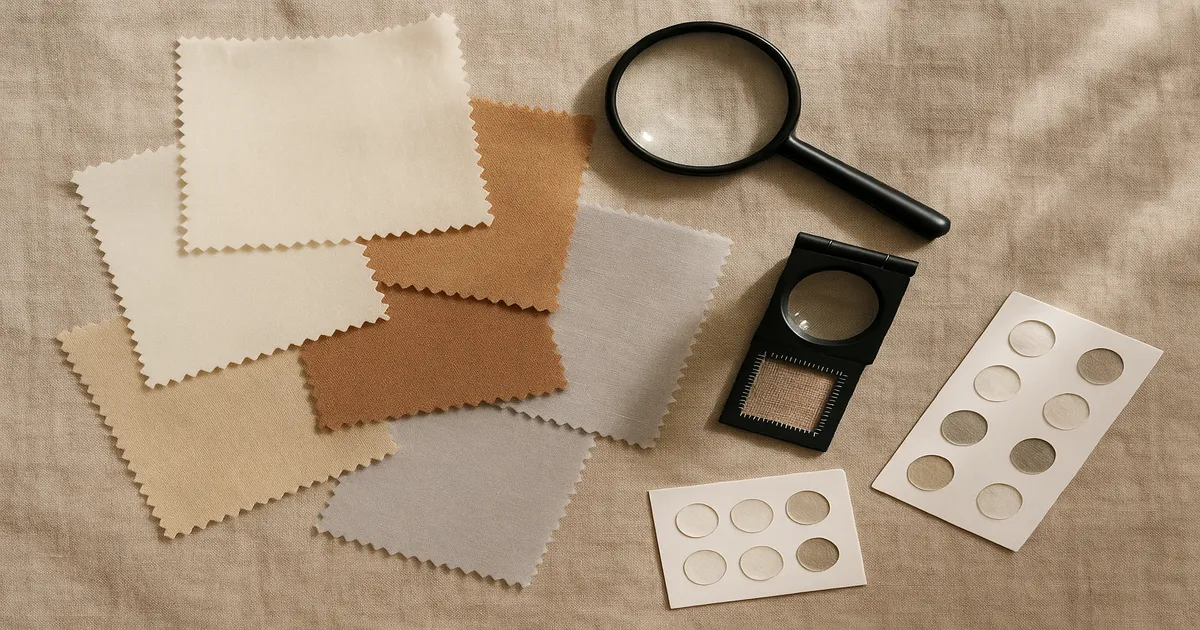
Most reputable online fabric retailers offer swatches for $1–$3. (Mood Fabrics Swatch Service) Ask for a sample at least 6×6 inches (15×15 cm) if possible — a 4-inch square is workable but barely.
Once your swatch arrives, run these tests:
- Scrunch test: Crumple it in your fist for 10 seconds, then release. Quality lining recovers quickly. Poor lining stays wrinkled.
- Drape test: Hold one corner and let the fabric hang. It should fall in fluid folds, not stand away stiffly.
- Pull test: Gently pull on the bias (diagonal). There should be some controlled give, and the fabric should recover. If it distorts dramatically and stays that way, the weave is too loose.
- Light test: Hold it up to a window. A lining claiming 60 GSM that’s nearly transparent is misrepresented.
- Snag test: Drag a fingernail lightly across the surface. Quality fabric resists. Cheap polyester catches immediately.
The Burn Test: Verify Fiber Content at Home
Pull a few threads from the swatch and hold them to a flame — do this outdoors or over a sink. Results are quite reliable:
- Silk and rayon: Burn slowly, self-extinguish, leave a crushable ash
- Polyester: Melts, beads up, smells faintly sweet
- Acetate: Melts and smells distinctly like vinegar
If a seller claims silk and your burn test produces plastic beads, you have your answer.
The Colorfastness Test You Shouldn’t Skip
Dampen the swatch and press it firmly against a piece of white cotton for 30 seconds. Any dye transfer is a serious problem — especially for a lining that sits against your skin all day. I’ve seen rayon linings bleed onto pale shell fabrics after a single wear. Don’t skip this one.
Common Mistakes When Buying Lining Fabric Online
Trusting “satin” or “China silk” labels without checking fiber content. “China silk” traditionally refers to lightweight silk habotai — but online, it’s frequently used to describe cheap polyester with a similar sheen. Always verify fiber content explicitly.
Ignoring static cling. Untreated polyester lining will cling to your legs, ride up skirts, and make a garment genuinely unpleasant to wear. Look for listings that specifically mention an anti-static finish. Rayon, cupro, and silk are naturally static-resistant, which is another reason they’re worth the extra cost.
Buying lining heavier than your shell fabric. Your lining should always be equal to or lighter in weight than the outer fabric. A heavier lining drags the garment down, distorts the silhouette, and causes premature wear at seam lines.
Underestimating yardage. Slippery lining is harder to cut accurately, and you’ll lose more to cutting errors. Add 10–15% to your calculated yardage — at minimum an extra ¼ yard for small projects, ½ yard for anything larger. If you run short and reorder, there’s a real chance the new bolt will be a different dye lot.
Skipping the sample because “it’s just lining.” The lining is what touches your skin all day. Treating it as an afterthought is how you end up with a beautifully constructed jacket that’s miserable to wear.
Pro Tips for Buying Lining Fabric Online With Confidence
Ask for the selvage edge photo. A professionally milled fabric has a tightly woven selvage with evenly spaced manufacturer information printed along it. A raw, fraying, or irregularly finished selvage suggests a lower-grade mill — and that looseness often reflects the quality of the fabric body itself.
Verify GSM from your swatch with a kitchen scale. Cut a precise 10×10 cm square from your swatch and weigh it on a scale accurate to 0.1 grams. Multiply the weight in grams by 100. That’s your approximate GSM. If the seller claimed 80 GSM and your calculation comes back at 45, you have concrete evidence of misrepresentation.
Watch video reviews before you buy. Search YouTube and TikTok for the fabric name or seller’s name. Video reviews where creators handle and drape the fabric on camera are invaluable — you can actually see how it moves, whether it has body or flops, and how it behaves when folded.
Use sharp scissors or a rotary cutter for slippery linings. Even good lining fabric will shift and distort if your cutting tools aren’t sharp. A fresh blade makes a real difference. Pin or use pattern weights to keep layers from sliding before you cut.
Order enough the first time. Solid-color linings can vary noticeably between production runs. If you order 3 yards, finish your project, and realize you needed 3.5, the reorder may not match. This is especially common with deep or saturated colors. Leftover lining fabric is useful; mismatched lining fabric is a problem.
Frequently Asked Questions
What is the best quality lining fabric for garments?
Silk charmeuse or silk habotai is the traditional gold standard — breathable, beautifully draped, and naturally anti-static. For most sewists working with a realistic budget, cupro (Bemberg) is the best practical choice: it behaves like silk, breathes well, and costs significantly less. High-quality rayon is a solid third option.
How do I know what GSM lining fabric I need?
Match GSM to your project: 55–75 GSM for dresses and skirts, 80–100 GSM for structured jackets and suiting, 100–120 GSM for coats. The lining should always be equal to or lighter than your shell fabric. If a seller doesn’t list GSM, ask — or shop elsewhere.
Is polyester or rayon better for lining fabric?
Rayon is generally better for garments worn close to the body — it breathes, resists static, and drapes more naturally. Polyester is more durable and easier to care for, but cheap polyester clings, doesn’t breathe, and can feel uncomfortable against skin. A mid-weight, anti-static polyester at 75–85 GSM is a reasonable alternative when rayon isn’t available.
How can I tell if an online fabric seller is reputable?
Look for complete fiber content and GSM listings, multiple product photos including close-ups, a swatch option, and a review history with photo reviews from buyers who purchased actual yardage. Established retailers like Mood Fabrics , Fabric.com, and Tissura list full specifications as standard. If a seller’s listings read more like a marketplace drop-ship listing than a fabric shop, proceed carefully.
What does anti-static lining fabric mean, and do I need it?
Anti-static lining has been treated to reduce the electrical charge that causes fabric to cling to skin and other fabrics. You need it if you’re using polyester lining in a skirt, dress, or trousers — untreated polyester will cling and ride up noticeably. Natural fibers like silk, cupro, and rayon are inherently static-resistant, so the treatment is only relevant for synthetic linings.