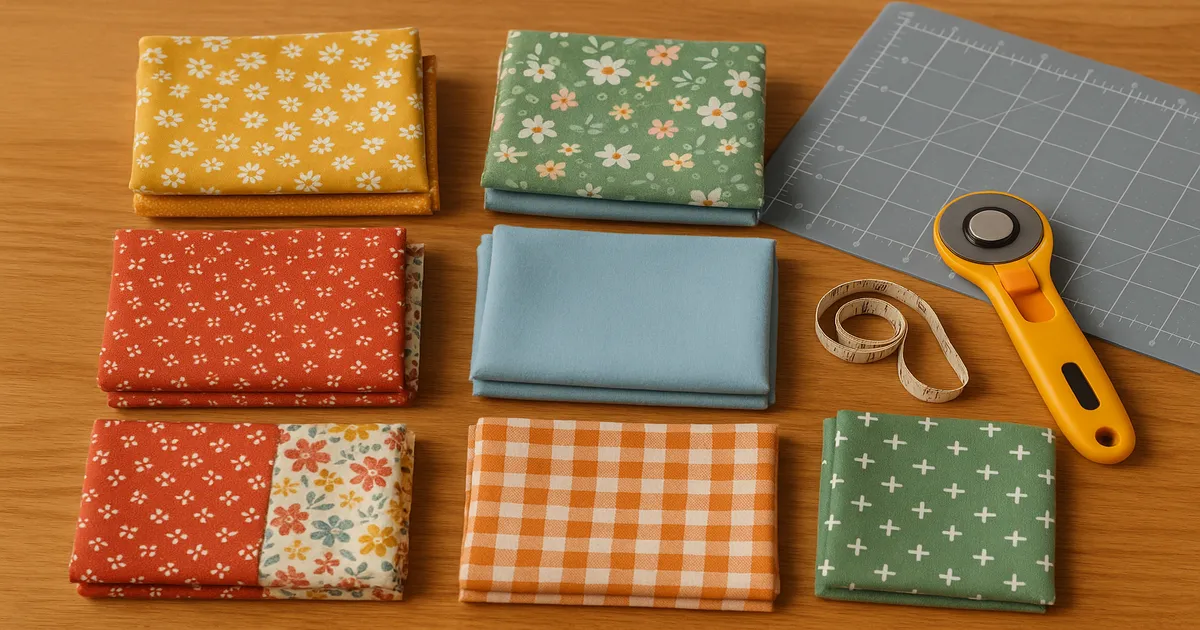
Quick Answer: Good prices for cotton patterned quilting fabrics per yard range from $3–$6 for budget options up to $35+ for luxury imports. For most everyday quilts, the sweet spot is $7–$12/yard — that’s where quality and value actually meet.
If you’ve ever stood in front of a fabric bolt wondering whether you’re getting a deal or getting ripped off, you’re in good company. Figuring out what are good prices for your typical cotton patterned quilting fabrics per yard is genuinely confusing — the market spans an enormous range, and the number on the bolt tag tells you almost nothing about whether that fabric is right for your project.
Here’s a quick reference before we dig in:
| Tier | Price Range | Best For |
|---|---|---|
| Budget | $3–$6/yard | Backs, donation quilts, practice |
| Mid-Range | $7–$12/yard | Everyday and gift quilts |
| Premium/Designer | $12–$18/yard | Show quilts, heirloom projects |
| Luxury/Specialty | $18–$35+/yard | Art quilts, collector pieces |
A $4/yard fabric is excellent value for a quilt back or a beginner’s practice project. That same fabric on the top of a show quilt you spent 200 hours piecing? That’s a false economy. “Good price” is always relative to what the fabric is actually doing in your quilt.
What Makes Quilting Cotton Its Own Price Category?
Quilting cotton isn’t just cotton — it’s a specific performance fabric. It’s woven to a standard 44–45 inch (112–114 cm) width, with a thread count typically between 60×60 and 80×80 threads per square inch, and it weighs around 3–4 oz per square yard (100–135 gsm). Lighter than apparel cotton, heavier than voile. It’s engineered to hold a crisp seam, fray predictably, and press flat without distorting — which is why it has its own pricing ecosystem, separate from apparel or home dec fabric.
Prices have also shifted significantly since 2020. The quilting revival of the 1970s and ’80s created demand for purpose-made fabric, and prices hovered around $2–$4/yard for decades. Designer collaborations in the 2000s pushed premium fabrics into the $12–$18 range. Then post-2020 supply chain disruptions added another 15–25% across the board. Today’s mid-range quilting cotton costs roughly twice what it did twenty years ago — worth knowing when you’re deciding if a price is “good.”
The Four Price Tiers of Cotton Patterned Quilting Fabric
Tier 1: Budget ($3–$6 per yard)
You’ll find this tier at Walmart, Jo-Ann’s clearance racks, and fabric discount warehouses. Thread counts sit at the lower end — around 60×60 — which means a slightly looser weave, more fraying at cut edges, and print registration that’s occasionally a little off. Brands like Walmart’s Quilter’s Showcase and AE Nathan basics live here.
None of that matters if you’re making donation quilts, backing fabric, or learning to use a rotary cutter . For those purposes, this tier is the right choice — not a compromise.
Tier 2: Mid-Range ($7–$12 per yard)
This is where most quilters spend most of their money, and honestly, it’s where the best value lives. Thread counts jump to 68×68–78×78, prints are sharper and more saturated, and the fabric behaves noticeably better under the needle. You’ll find this tier at Jo-Ann (regular price), Hobby Lobby, Missouri Star Quilt Co., and Fat Quarter Shop.
Moda Fabrics basics lines and Robert Kaufman Kona Cotton sit squarely here. Kona in particular — around $10–$12/yard for a solid — is the industry standard for good reason. It’s consistent, widely available, and comes in over 300 colors.
Tier 3: Premium and Designer ($12–$18 per yard)
At this level, you’re paying for licensing, print complexity, and a noticeably better hand feel. Thread counts often hit 78×80 or higher, sometimes with a mercerized finish. Art Gallery Fabrics is famous for their Performance Edition cotton, which has a silkier drape than standard quilting cotton. Tula Pink for Free Spirit, Kaffe Fassett Collective, and Anna Maria Horner all live in this tier.
Your local quilt shop is the primary source here. The premium over big-box pricing is often worth it — LQS staff have actually touched and worked with the fabric they’re selling you, and that curation matters when you’re spending $15/yard.
Tier 4: Luxury and Specialty ($18–$35+ per yard)
Japanese imports like Nani Iro, Lecien, and Sevenberry, plus Liberty of London Tana Lawn , occupy this tier. These fabrics are often hand-screened or digitally printed with archival inks, and weave density can exceed 80×80. They’re genuinely special — and genuinely for special projects. I’d never cut Liberty lawn for a kid’s quilt that’s going to be dragged around for a decade. For an heirloom baby quilt meant to be kept? Absolutely the right call.
Fat Quarters, Jelly Rolls, and Pre-Cuts: What You’re Actually Paying Per Yard
A fat quarter is an 18×22 inch (46×56 cm) cut — one quarter of a yard sliced as a rectangle rather than a long strip. Typical prices by tier:
- Budget: $1.50–$3.00
- Mid-range: $3.00–$5.00
- Premium: $4.50–$7.00
- Luxury: $7.00–$12.00+
Fat quarter bundles — usually 20–40 coordinated prints from a single collection — often run 10–20% cheaper than buying those prints individually. If you love a collection, the bundle is almost always the better deal.
For other pre-cuts, here’s the math:
- Jelly Rolls (40 strips of 2.5 inches / 6.4 cm): roughly 10 yards of fabric, retailing at $35–$55 — effective $3.50–$5.50/yard
- Charm Packs (42 squares of 5 inches / 12.7 cm): roughly 3 yards, retailing at $12–$18 — effective $4–$6/yard
- Layer Cakes (42 squares of 10 inches / 25.4 cm): roughly 12 yards, retailing at $45–$75 — effective $3.75–$6.25/yard
Pre-cuts carry a modest convenience premium, but it’s not outrageous. The real limitation is that you’re locked into the cuts that come in the pack — you can’t cut a 6-inch square from a Jelly Roll strip without waste. If you need more than 2 yards of any single print, buying off the bolt almost always wins on price per square inch.
What Drives Quilting Fabric Prices Up (or Down)
Designer licensing fees are a bigger factor than most people realize. A name like Tula Pink or Kaffe Fassett can add $2–$5/yard to production cost before the fabric hits a retail shelf.
Print complexity is the other major driver. A two-color geometric is cheap to print. A 12-color photorealistic floral with precise registration requires more screens, more passes, and more quality control — and that cost flows through to the bolt price.
Country of manufacture matters too. Fabrics milled in the USA or Japan command premiums over those produced in China, India, or Pakistan. That’s not snobbery — it reflects real differences in labor costs, environmental standards, and quality control.
Retail channel shapes what you pay as well. Local quilt shops operate on higher margins than big-box stores, but they pre-select for quality and offer genuine expertise. Online retailers compete aggressively on price but require you to know exactly what you’re buying before you click.
How to Spot Good Quality Before You Buy
The drape test. Fold the fabric over your hand and let it fall. Quality quilting cotton drops in soft, defined folds — it has what sewers call “body.” Cheap fabric either hangs limp or feels stiff and papery.
The light test. Hold the fabric up to a window. A tighter weave lets through less light and will fray less at cut edges. Uneven patches of light signal inconsistent weave density.
Read the selvage. That tightly woven finished edge (about ½ inch / 12 mm on each side) carries the designer’s name, collection name, and a row of color dots showing every ink used in the print. Those dots are useful — hold them against fabrics from other collections to find coordinates that actually work. Never cut selvages off before photographing them. Collections sell out fast, often within 6–12 months of release, and the selvage is your best way to track down more of a print you love.
Watch for counterfeits online. Fabric listed as “100% cotton quilting fabric” can easily be a poly-cotton blend. The burn test settles it: 100% cotton burns cleanly, smells like burning paper, and leaves soft gray ash. Polyester melts, smells chemical, and leaves hard plastic beads. Stick to established retailers — Missouri Star Quilt Co., Fat Quarter Shop, Hawthorne Supply Co., or your local quilt shop. Unverified Amazon marketplace sellers are where problems tend to happen.
Common Buying Mistakes (and How to Avoid Them)
Forgetting shrinkage. Even “pre-shrunk” quilting cotton can shrink 2–3% when washed. On a 10-yard purchase, that’s up to 11 inches of lost fabric. Buy an extra 10–15% beyond your calculated need, especially with patterned fabric.
Ignoring pattern repeat waste. A fabric with a 12-inch (30.5 cm) repeat may require 25–50% more yardage than a non-directional print to match seams properly. Large-scale prints with 18–24 inch (46–61 cm) repeats can be notoriously wasteful — always calculate repeat waste before you cut.
Missing coupons. Jo-Ann regularly offers 40–50% off single-item coupons through their app. Using one on a $14/yard premium fabric brings it squarely into mid-range territory. Hobby Lobby runs rotating 30–40% off fabric sales. These aren’t cheating — they’re just smart shopping.
Buying without a plan. I’ve done this. Everyone has. Buying fabric at a great price without a specific project in mind leads to an unmanageable stash and a lot of fabric that never gets used. If you’re going to impulse-buy (and you will), at least catalog it immediately: photo, yardage, source, and a rough project idea. A simple quilting fabric storage system keeps things from becoming a pile of regret.
Frequently Asked Questions About Quilting Fabric Prices
What are good prices for cotton patterned quilting fabrics per yard at major retailers?
Jo-Ann’s regular-price quilting cotton runs $8–$13/yard, but their 40–50% off single-item coupons (available through the app) can bring that down to $5–$7/yard. Hobby Lobby runs rotating 30–40% off fabric sales. Online retailers like Missouri Star Quilt Co. and Fat Quarter Shop tend to sit in the $9–$14/yard range for mid-range to premium fabric, with frequent bundle deals that improve the per-yard cost.
Is $12 per yard expensive for quilting fabric?
Not really. Twelve dollars per yard sits at the lower end of the premium tier and is pretty standard for name-brand designer fabric at a local quilt shop. For a show quilt or a special project, it’s a reasonable spend. For quilt backs or practice work, you can do much better at $4–$6/yard.
Why is designer quilting fabric so much more expensive than regular cotton?
Two main reasons: licensing fees and print complexity. A designer name can add $2–$5/yard in licensing costs before the fabric reaches retail. On top of that, complex multi-color prints with precise registration cost significantly more to produce than simple two-color designs. You’re paying for the art and the name, not just the cotton.
How many yards do I need for a throw-size quilt?
A standard throw (roughly 60×80 inches / 152×203 cm) requires approximately 5–7 yards for the quilt top, depending on your pattern and cut waste. Add another 4–5 yards for backing and you’re looking at 9–12 yards total before batting. At $10/yard for mid-range fabric, budget $90–$120 just for fabric — more if your pattern has large repeats.
Are fat quarters cheaper than buying off the bolt?
Usually, no — fat quarters carry a small convenience premium. Their real advantage is variety: you can get 20 different prints from a collection for the price of 5 yards of yardage. If you need more than 2 yards of a single print, buying off the bolt is almost always cheaper per square inch.